Studio test method

How to Measure Your Clay's Shrinkage Rate

A supplier percentage is a starting point. A simple marked bar captures what your clay actually does in your kiln.

01

Prepare a test bar

Roll or press a consistent strip from the clay body you want to test. Label the clay and firing schedule.

Step 1: Prepare a test bar — pottery clay shrinkage test bar illustration
02

Mark the original length

Make two fine reference marks exactly 100 mm apart while the clay is plastic. Avoid measuring the rough ends.
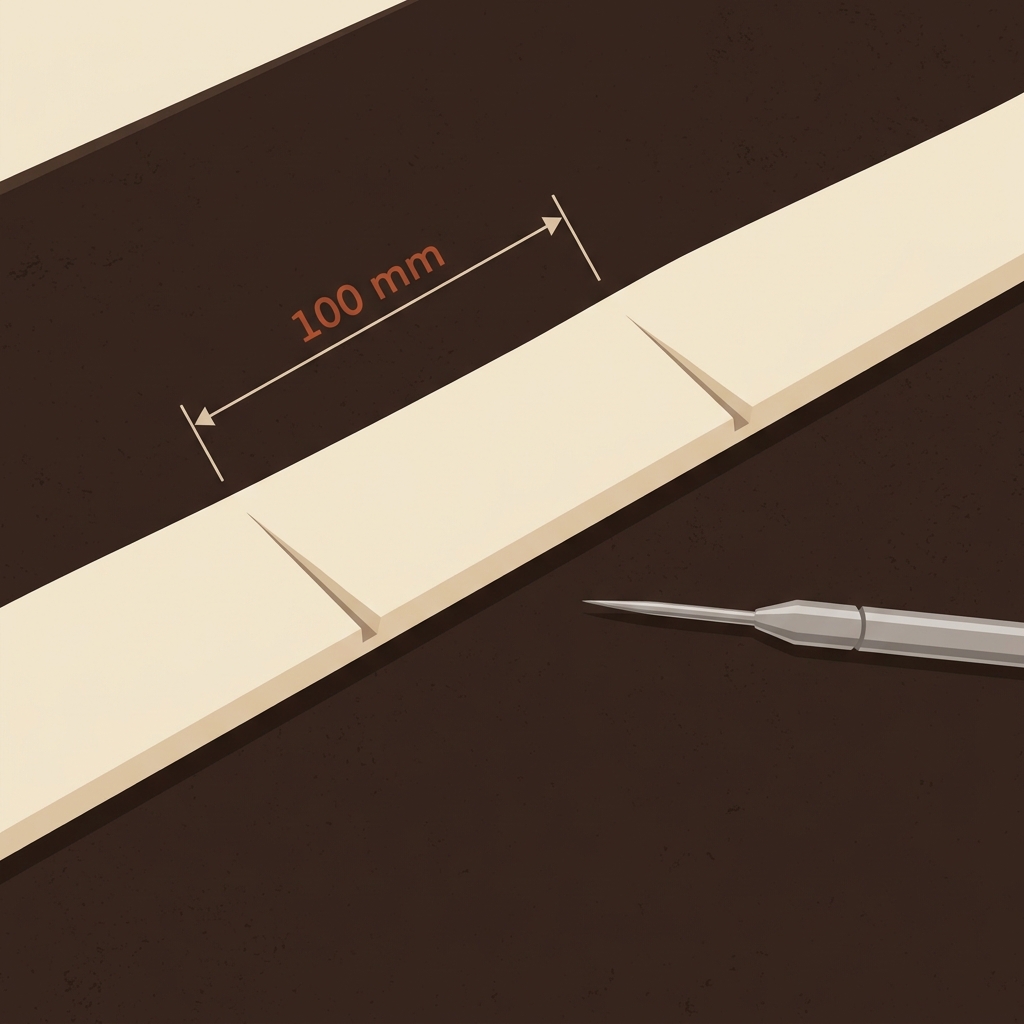
Step 2: Mark the original length — pottery clay shrinkage test bar illustration
03

Dry it completely

Dry the bar as you would your normal work. Measure now if you also want drying shrinkage as a separate figure.
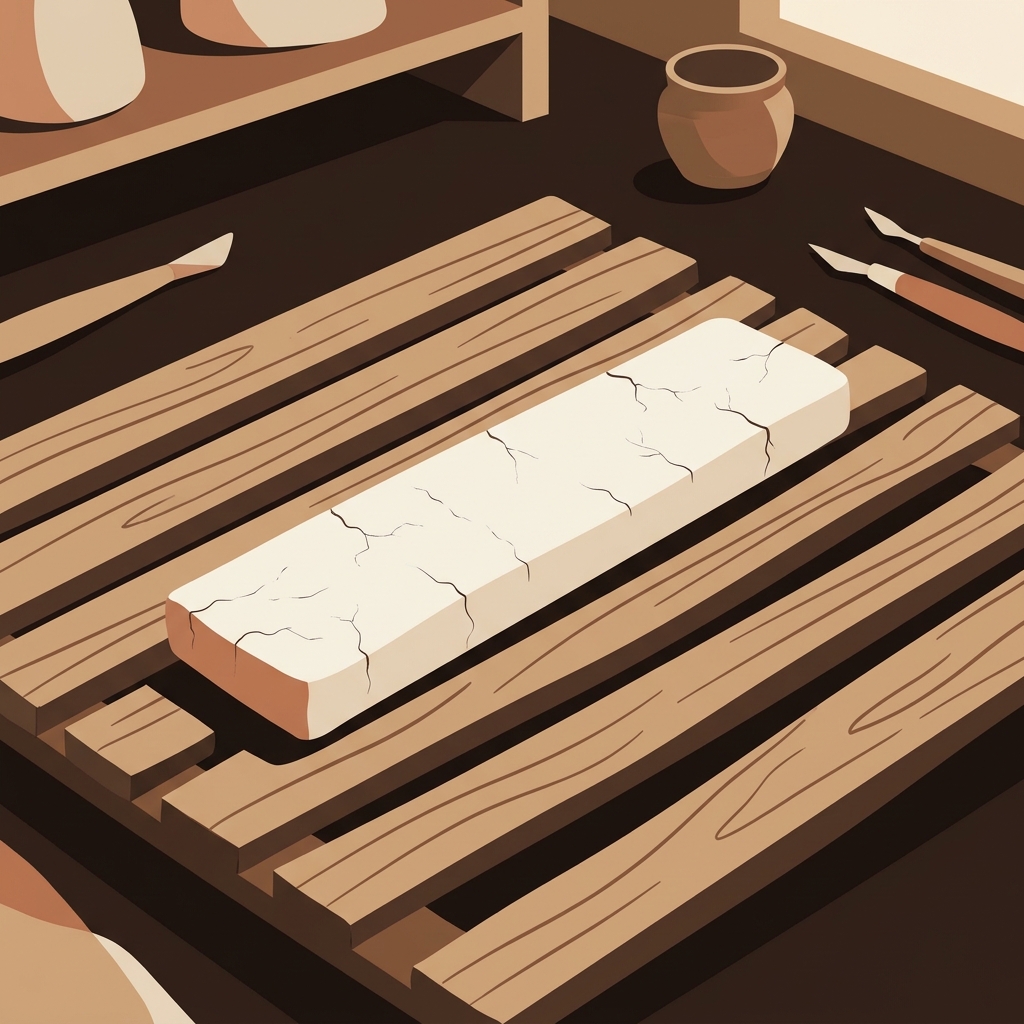
Step 3: Dry it completely — pottery clay shrinkage test bar illustration
04

Fire with your work

Fire the bar to the same cone and in the same schedule you plan to use for the finished pieces.

Step 4: Fire with your work — pottery clay shrinkage test bar illustration
05

Measure between marks

After cooling, measure the distance between the original reference marks with an accurate ruler or calipers.
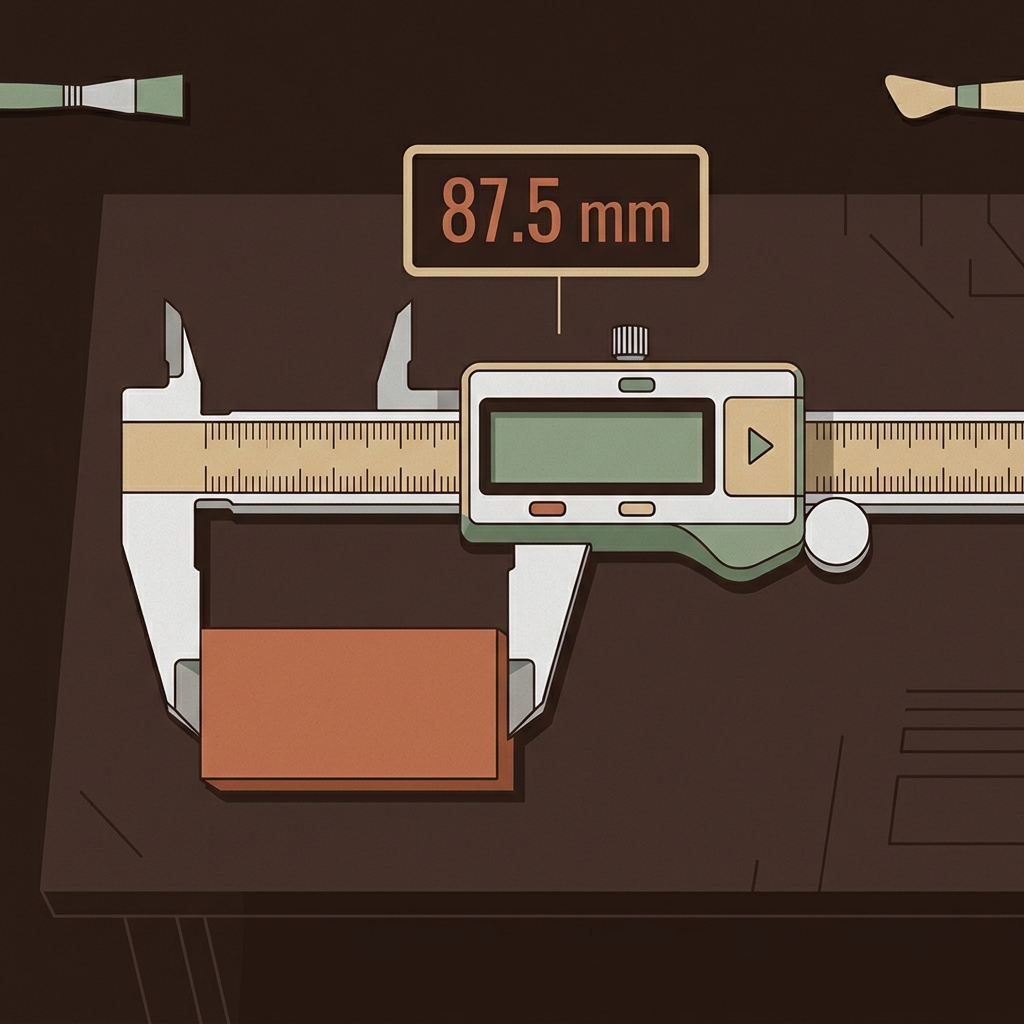
Step 5: Measure between marks — pottery clay shrinkage test bar illustration
06

Calculate and make a ruler

Use 100 × (1 − fired ÷ wet), then carry that percentage directly into the ruler generator.
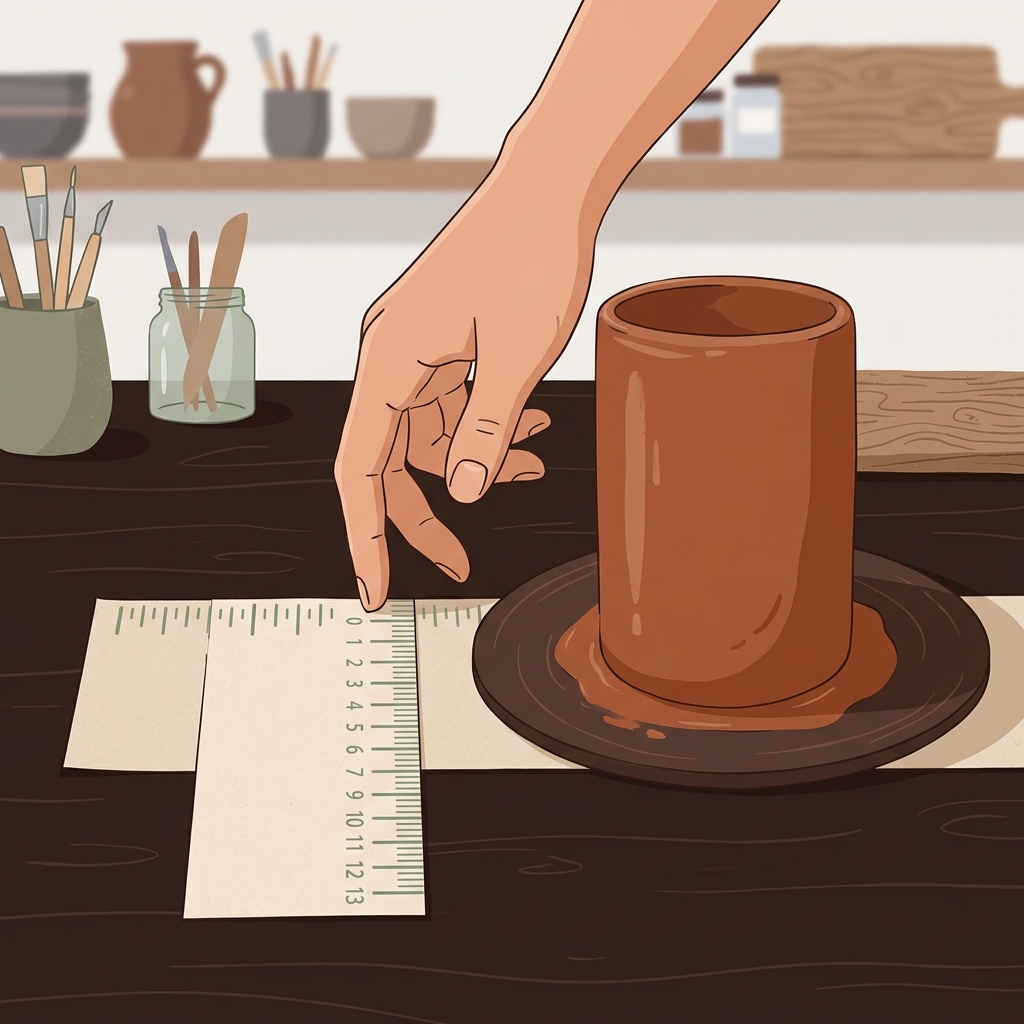
Step 6: Calculate and make a ruler — pottery clay shrinkage test bar illustration
shrinkage % = 100 × (1 − fired length ÷ wet length)

Worked example

A bar marked at 100 mm measures 87.5 mm after firing. Its shrinkage is 100 × (1 − 87.5 ÷ 100) = 12.5%.

Create a 12.5% printable ruler →

After you have your shrinkage rate

Enter your measured percentage into the clay shrinkage ruler generator to produce a full-scale printable ruler. You can also use the shrinkage calculator to convert individual measurements, or the size before firing calculator to find the wet dimensions for any desired fired size.

Compare your result to the clay shrinkage chart to see how your clay body compares to typical earthenware, stoneware, and porcelain values.

Frequently asked questions about clay shrinkage

What is clay shrinkage?

Clay shrinkage is the reduction in size that occurs as clay dries and is fired. Water evaporates during drying and organic matter burns off during firing, causing clay particles to move closer together. Total shrinkage from wet to fired is typically 7–16% depending on the clay body.

How do I measure my clay's shrinkage rate?

Make a test bar and mark two reference points exactly 100 mm apart while the clay is wet. Fire the bar the same way you fire your work, then measure between the marks. Shrinkage % = 100 × (1 − fired length ÷ 100).

Can I use a supplier's shrinkage figure instead of testing?

Supplier figures are useful starting points, but your forming method, drying conditions, firing schedule, and even the specific clay batch all affect the actual result. Test your own clay for work that must fit precisely—lids, inserts, or sets of pieces.

How long should a shrinkage test bar be?

A 150–200 mm bar works well. Mark a 100 mm reference span within the bar, away from the rough ends. Longer bars are more accurate because a small measurement error is a smaller percentage of a longer span.

Does drying shrinkage differ from firing shrinkage?

Yes. You can measure drying shrinkage separately by measuring between the marks after the bar is bone dry. Firing shrinkage is the additional shrinkage that happens in the kiln. Total shrinkage is the sum of both.