Understanding slip casting volumes
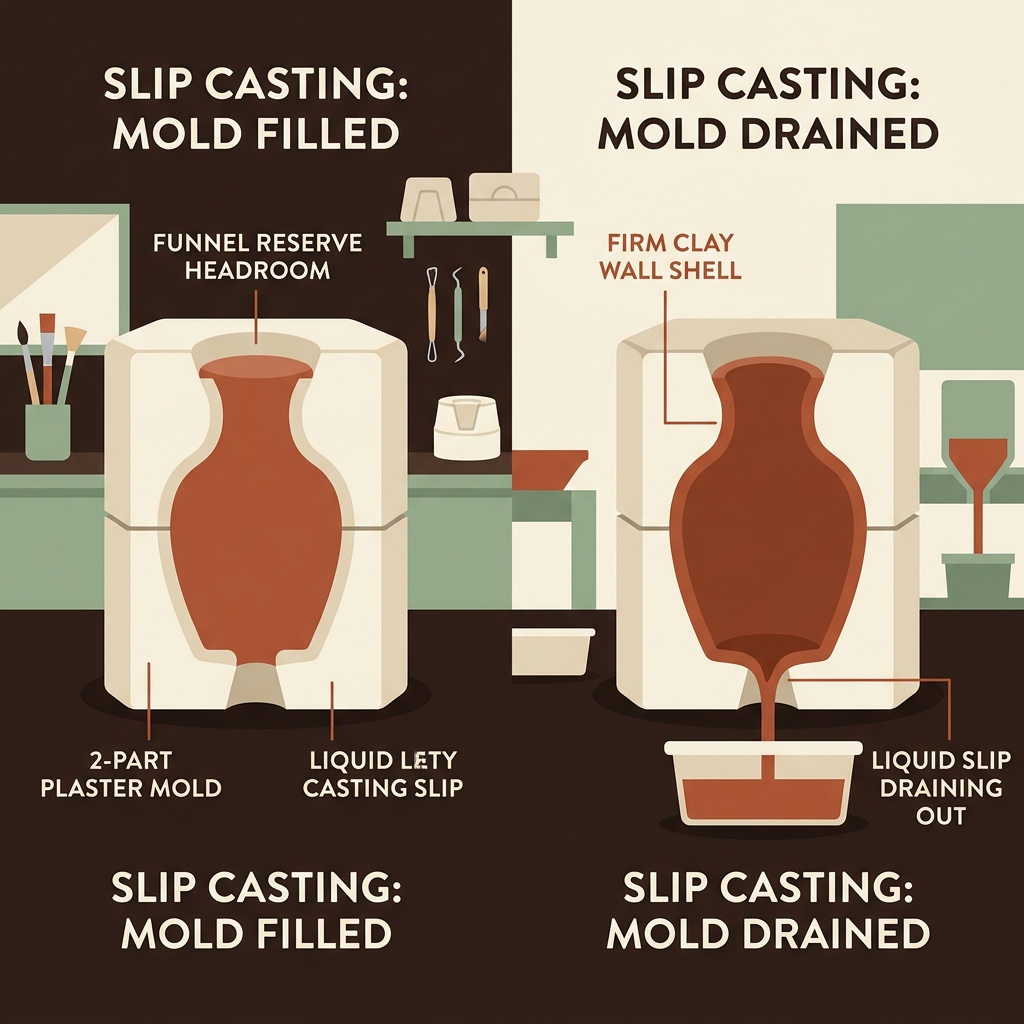
During slip casting, liquid clay slip is poured into a dry plaster mold. Water is absorbed into the plaster walls, building up a firm clay shell inside the cavity. Once the desired wall thickness is achieved, remaining liquid slip is poured back out.
Why reserve volume matters
As the plaster absorbs water, the liquid level inside the mold drops. A spare funnel or reservoir ring on top of the mold maintains hydraulic head pressure and prevents low-density rings or rim voids.